
The Sinfonietta’s artist-in-residence, Kathryn Bostic, will premier her commissioned work, “Letters from Moral Courage.” It’s a 20-minute read more.
Category: Recent Press
Chicago Tribune | Chicago Sinfonietta’s MLK tribute comes to Naperville
WFMT | Music and Conversation with Blake-Anthony Johnson
George Preston is joined by Chicago Sinfonietta CEO Blake-Anthony Johnson to preview upcoming Chicago Sinfonietta performances, discuss Sinfonietta’s move to the Auditorium Theatre, and hear Blake-Anthony’s thoughts on being chosen as one of Crain’s 40 Under 40 Business Leaders.
Chicago Tribune | Chicagoan of the Year for Classical Music: Chicago Sinfonietta president and CEO Blake-Anthony Johnson leads an orchestra for everyone
For the past couple of years, all eyes have been on the Chicago Sinfonietta. Some of that attention was nothing new — or, at least, it shouldn’t have been, seeing as the Sinfonietta has championed racial and ethnic diversity onstage, in its audience and in its programming for, oh, 35 years now.
Spoleto Festival USA Announces Expanded Orchestra Showcase for 2023
Three concerts highlight the acclaimed Festival ensemble with special guest
conductors Mei-Ann Chen and Jonathon Heyward.
Ticket packages for the series are available Monday, December 5, 2022, at 12:00pm EST.
Spoleto Orchestra Series-PR-12.5.2022
“Rays of hope amid the despair in 2020” Chicago Tribune | December 2020
“For music lovers, this was a year of monumental losses and occasional triumphs, vast silences and sorely needed bursts of sound.
Though there’s no way to claw back the music and musicians stolen from us by the coronavirus pandemic, there’s no denying the resilience Chicago’s jazz and classical musicians showed in the face of disaster. Whole seasons were canceled, clubs and concert halls stood empty, audiences disappeared. Yet Chicago’s musicians found new ways to reach listeners in a venue where few had ventured before: cyberspace.
The Chicago Sinfonietta offered a world premiere; Lyric Opera music director designate Enrique Mazzola provided a tutorial on Verdi’s “Attila”; and the CSO, Lyric Opera and Ravinia, Grant Park and Hyde Park Jazz Festivals all did what they do best – online.
As always, the Sinfonietta stood at the forefront locally and nationally in bringing diversity, equity and inclusion into the Eurocentric world of classical music. More than 35 percent of the orchestra is staffed by musicians of color, and over 45 percent of those are women, according to the Sinfonietta. Its audience is on average 46 percent people of color (specifically 37 percent African American, 5 percent Latino and 4 percent Asian). Equally striking: 58 percent of the board, 73 percent of the associate board and 36 percent of the staff are people of color.
No major orchestra in America comes close to this kind of representation, and when we come out of the pandemic, these institutions need to find ways to better reflect the communities in which they’re based. It’s an age-old problem for classical music, but one that no longer can be ignored.”
Read the article in Chicago Tribune
By Howard Reich
Chicago Tribune | Dec 08, 2020
Chicago Sinfonietta Presents “Twas the Night Before Christmas” | December 2020
Chicago Sinfonietta Presents “Twas the Night Before Christmas”
Continuing it’s 2020-21 season theme of storytelling, Chicago Sinfonietta invites everyone to get into the spirit of the holiday season with a Sinfonietta virtual premiere – a video performance of the popular poem “Twas the Night Before Christmas” by Clement Clarke Moore.
The family-friendly video presentation of the world-beloved tale continues the time-honored tradition of reading the poem, but with a Sinfonietta twist.

“Twas the Night Before Christmas” is available to watch on any of Chicago Sinfonietta’s social media channels – facebook, twitter or youtube.
Media wishing to share the video are welcome to do so.
Note: Due to COVID-19 no reindeer were asked to travel to Chicago from the North Pole for this video. Santa and his reindeer have been granted special global travel exemption and will be making their traditional rounds worldwide on December 25th. Reading approved by Elves Union North Pole 1.
Chicago Sinfonietta Announces Two New Board Members | December 2020
Chicago Sinfonietta’s Board of Directors Grows By Two
Chicago Sinfonietta is pleased to announce the addition of two leaders from the healthcare and entertainment fields to its Board of Directors: Sundar Subramanian, Partner in Pricewater-house-Coopers, and Allyson Wynn, Founder and CEO of The Wynning Experience. Cited by Crains Chicago Business as the most diverse non-profit board in Chicago, the new members join an influential group of leaders from a variety of sectors dedicated to supporting the 33-year-old MacArthur Award-winning orchestra, a pioneer and positive influencer in the orchestral world holding an international position at the forefront of progressive change in the arts through its mission of diversity, equity and inclusion.
Scott Hoesman, Chair of the Board of Directors and CEO and Founder of inQUEST Consulting in Chicago stated, “The Sinfonietta has been built on the premise that the universal language of music has the power to help us understand, appreciate and unite around the diversity of our human experiences. We are thrilled to have the leadership that both Allyson and Sundar bring to our Sinfonietta family. We welcome their voices and commitment as we continue to accelerate our efforts to drive positive change not only in the arts, but for our world as a whole.”
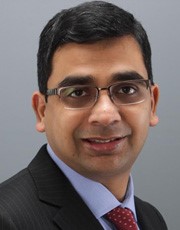
A Senior Leader and Partner in PricewaterhouseCoopers (PwC) based in New York, Sundar Subramanian leads US Strategy Consulting business and Growth platforms for PwC Health Industries. Widely published, including in Fortune, HBR, Forbes, Health Affairs, strategy+business, and Financial Times, Mr. Subramanian is a recognized expert in healthcare.
He pioneers in enterprise value creation, and linking community health and value -linking the social determinants in addition to clinical factors to improve measures such as healthy life years of communities. Mr. Subramanian is also a champion for Diversity and Inclusion in the work place within his teams.
Mr. Subramanian holds an MBA from The Wharton School, MS from MIT, and a BTech from IIT-Varanasi, India.
“I am honored to join The Sinfonietta family, the MacArthur Award- winning orchestra, that has a long track record of positive community impact,’ said Mr. Subramanian. “Groundbreaking programs like Project Inclusion foster creativity, mentorship, talent development, and breaks down traditional economic or social barriers across communities so everyone has the opportunity to experience and develop in music.”
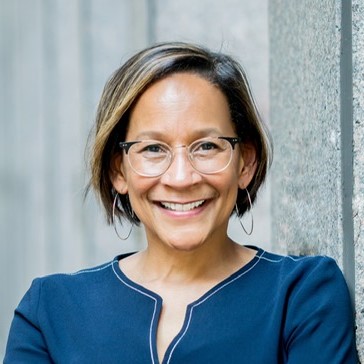
Allyson Wynn is the founder and Lead Event Planner for The Wynning Experience. The Paducah, Kentucky native’s experience and expertise lies in project management, consumer-focused promotion, strategic activation, and virtual events. Throughout her career, Ms. Wynn has excelled in bringing brands to life. She consistently demonstrates the ability to build bridges between consumers and their preferred brands. Her clients include The Coca-Cola Company; Anheuser-Busch, Inc.; the City of Mobile; The Children’s Health Fund; and University of Pittsburgh Medical Center, to name a few.
Ms. Wynn honed her craft working on large-scale projects such as the Essence Festival, Billboard Music Awards, Oprah Live Your Best Life Tour, and the National Football League Super Bowl. In addition, her passion for event planning earned her national recognition and an acknowledgment by her peers and professional organizations.
States Wynn, “I have always enjoyed art no matter the form. The expression, art is in the eye of the beholder, is true. However, it is important for the beholder to be able to see themselves in the art. Chicago Sinfonietta gives us all the opportunity to not only feel and hear the power of music, but it also allows us to see ourselves through the diversity of its members. It is an honor to lend my talents and skills to help move the orchestra forward.”
Chicago Sinfonietta’s progressive board is 56 % female, 40 % Black, 8% Latino, and 12 % Asian, and has a 15 member Associate Board that is equally diverse.
Six artists of color make their mark in classical music | Chicago Sun-Times, August 2020
Kyle MacMillan of the Chicago Sun-Times spoke with Chicago Sinfonietta Principal Violist Marlea Simpson for a feature on the future of classical music.
“According one report, the share of African American and Latino musicians in American orchestras stood at just 2.5 percent in 2014.
Success for Marlea Simpson will be when the entire field functions like the Chicago Sinfonietta, where the African American musician has served as principal violist since 2014. The ensemble is an unusual outlier in the orchestral realm, because at least one third of its musicians, staff and board are people of color.
“I get to experience classical music in the way I feel it should be experienced,” she said.”
The Southside Friends of Chicago Sinfonietta present “Summer Magic” | August 2020
The Southside Friends of Chicago Sinfonietta presented Summer Magic: A Virtual Brunch on August 4, 2020 to help raise critical funds to support musician operations in the wake of the devastating impact of COVID-19.
The program was a success, providing much needed support for our musicians through general operating expenses with lively performances that celebrated the future of Chicago Sinfonietta.
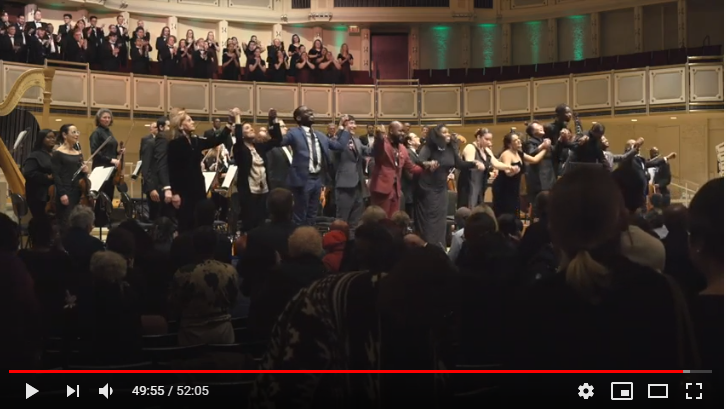
“Summer Magic: A Virtual Brunch kicked off at 11 a.m. Saturday morning. Many of those speaking on behalf of the Chicago Sinfonietta held a glass flute filled with a sparkling beverage, and by the end of the online event I expect that many of those listening raised their own glasses, or perhaps mugs of tea or coffee, in honor of the group’s achievements and the enjoyable performances from the musicians.” —Hyde Park Herald
Missed the live event? Watch online now.
Chicago Sinfonietta Confronts Racial Bias In Classical Music | Newcity Music, July 2020
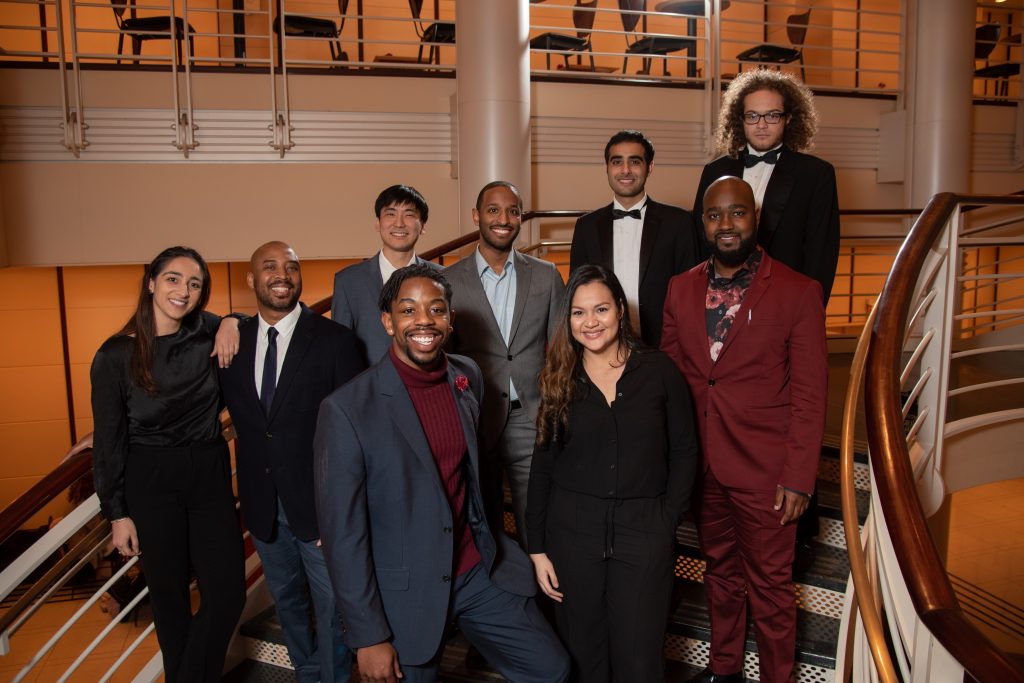
Seth Boustead of New City Music speaks with Project Inclusion Director Danielle Taylor for an insider perspective on Chicago Sinfonietta’s groundbreaking fellowship and education program.
“What does it mean to make art now? When survival is the primary thing on our mind, and then also to do so under circumstances where you can’t make art with people, like in the same room with people, which I think for Black people, culturally has been so, so important in surviving in this country. Being together and making music, from churches to jazz. Being deprived of that at this moment is yet another piece that feels so broken.”
Violinist, violist, writer and thinker Danielle Taylor is not talking about survival figuratively or only in relation to the coronavirus. In a country that routinely murders its citizens for being Black, and too often lets perpetrators get away with it, she is talking about actual survival.
I had contacted Taylor about her role as director of Project Inclusion at the Chicago Sinfonietta to talk about the initiative’s extraordinary work. I had a conundrum on my hands: I had agreed to write the classical music article for Newcity for July but there are no performances to write about and, given our current climate, writing about how classical music groups are reaching audiences virtually felt tone deaf.
As in the wake of the MeToo movement, classical music is having to confront a legacy most organizations would prefer not to talk about—in this case, a long legacy of racial exclusion in nearly every area, from the stage to key administrative and management positions.
It’s this legacy that Project Inclusion hopes to change. “This fellowship exists to make up for the lack of opportunities and all the years that come before,” Taylor says. “Those opportunities look like private lessons but also the privilege of choice, because what money can provide is the choice of saying, okay, this teacher doesn’t work for my child anymore. So we’re going to move to a different teacher who can prepare them at a higher level.
“And there are so many people who come up through very important nonprofit schools, yes; but that does not compare to intensive one-hour lessons where you can choose who’s going to take you to the next level. Then there are festivals which are extremely expensive, and there are people who can’t afford the application fee, let alone a plane ticket to get there.
“We can’t talk about race without also talking about economics, without talking about who has the accumulated wealth in the country. And it has not been Black people and people of color and that leads to exclusion. When there are people not feeling welcomed or encouraged or supported by their institutions and teachers, ultimately that can lead to dropping out, to deciding to take a different career path.
“By the time you get to the people who are actually in the field and have jobs, that’s such a small number of the people who would have worked passionately with all their might to get there.”
Project Inclusion currently has fellowships for string players and conductors, and are adding a composition fellowship this year. The training is intensive and hands-on. The fellows take private lessons and master classes, but perform with the Chicago Sinfonietta as well, an incredible opportunity. They also practice mock auditions and media interviews and master all aspects of being a successful classical musician, on and off stage.
“There’s also the time and the space to talk openly about the challenges that our fellows face navigating the field,” Taylor says, “because it can’t be divorced from race and gender and all of the often-negative ways that we’re perceived. Allowing that space to have those conversations is also important. The power of Project Inclusion comes from building a strong community with all of the fellows and instead of seeing each other as competitors, they see each other as family.”
But Project Inclusion is only one project at one institution. Reaching the goal of changing the face of classical music, it’s going to take all of us. If you use email, you’ve probably been barraged with messages from arts organizations saying they “stand in solidarity” with the protest movements. These are noble sentiments and I don’t doubt the sincerity of organizations sending them out. But you don’t have to look far to see that by not acknowledging the history of exclusion and the pain that it has caused, these messages often do more harm than good. Just by being part of the fabric of a racist society, most institutions are complicit.
“Every single one of these institutions absolutely has enacted harm,” Taylor says. “It’s part of their organizational structure because your organization is not an organization. It is a building filled with people that make decisions, and those people have values and prejudices and all of that. So to me, there’s not a chance that there’s a single organization that hasn’t enacted harm.
“I know people are thinking very carefully and very deeply about the statements about racism. But it’s not clear who they’re speaking to. I think they’re speaking to the general world. So they want them to know that, hey, we see bad things are happening. They’re not speaking to the people who are most harmed. They’re not speaking directly to Black people. Most of the institutions don’t even say ‘Black people,’ it’s vague things like ‘injustice’ and ‘protest.’ Who are you talking to? That’s not for us.”
There’s no easy solution, and classical music is not alone in dealing with a racist legacy. But we in the arts are by and large a sensitive bunch. We can admit that we’ve done harm and have been complicit in doing harm. We can stop pretending that Black people, or any other excluded people, should mistake our feeling bad for real change. Because it isn’t real change. Not while any single person in this country has to wonder if they’ve been excluded from reaching their full potential because of the color of their skin, and certainly not while anyone in this country has to worry about their very survival.
The protests will die down, the pandemic could end. We’ve been given the challenge of reinventing our organizations and we’ve been given plenty of time for self-reflection. What will we do next?
Learn more about the 2020-2021 Project Inclusion Freeman Fellowship class.