A Conversation With Dr. L. Subramaniam


Dr. L. Subramaniam is considered one of the most outstanding Indian classical violinists, but he has also established himself as one of the foremost Indian composers in the realm of orchestral music.

He has recorded, played, and composed a variety of music including South Indian Carnatic, Western classical, jazz, world fusion, and world music. We spoke with Subramaniam about his masterful intersection of Indian and Western music, his many artistic collaborations, and his upcoming performance of Shanti Priya with the Chicago Sinfonietta.
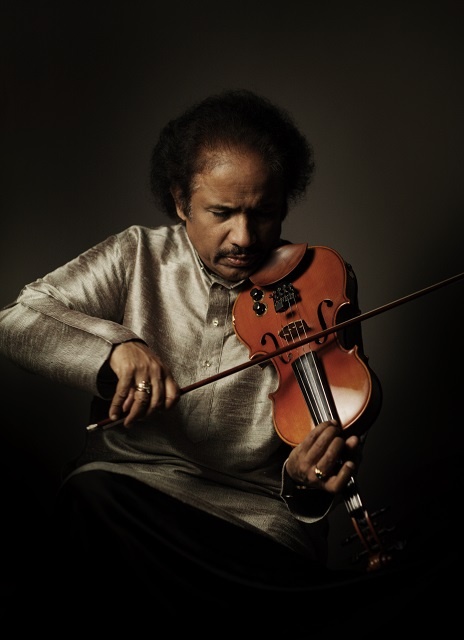
 

Is the violin a western instrument adapted for Indian classical music? If so, what are the features of it that make it well suited to that purpose?

There have always been many stringed and bowed instruments in Indian music, but the violin came in during the British rule. It was eventually adapted into Indian classical music because it was well-suited to accompany the human voice. At a time when there were no mics, it was especially useful to have an instrument whose volume could match the singer’s. The violin has no frets, which made it easier to slide a bow across it smoothly. This also meant the instrumentalist could sustain a note as long as they wanted.

For these reasons, the violin was and continues to be the primary accompanying instrument in Carnatic music. In the early 20th century, my father, Professor V. Lakshminarayana, introduced a technique that violinists could use to play solo; he developed different methods that made the violin stand out as distinct from the singer’s voice while still retaining its voice-like qualities.

What are the main characteristics of Carnatic music tradition, and how are they applied to Western orchestras?

The two most important concepts of Carnatic music are raga and tala; each raga is based on a scale and each tala is a rhythmic cycle or time signature. Possibly the most identifiable aspect of Carnatic music, however, are the slides we use (called gamakas). Each raga has its own gamaka, or ornamentations. The challenge is to take these elements and use it in an orchestral context while also maintaining the individuality of a symphony orchestra.

The idea here is not to make an orchestra play Indian music, but to create something where both Western and Indian musicians feel like they’re playing their own music while creating something unique. With this context, we combine elements of Carnatic music with parts of Western classical music (like harmony and counterpoint) to build something entirely original.

What makes an artist someone who you want to work with?

The artist’s music should be something I enjoy for what it is. Second,  they should be open to trying new things. In a new collaboration, it is natural to have to step out of your comfort zone and experiment a little. I need to know that the musicians I’m working with are receptive enough to new and exciting ideas going forward, as I certainly will be.
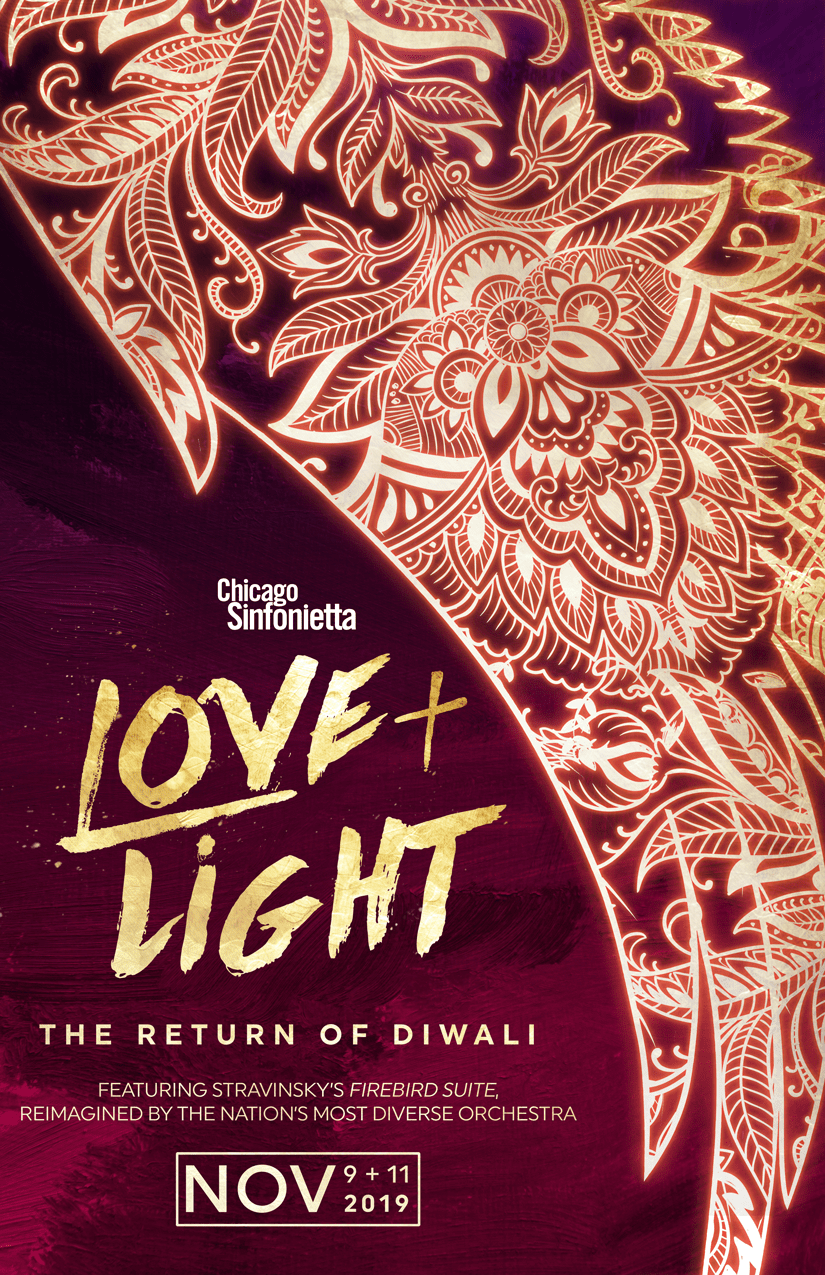
Shanti Priya is a violin concerto for peace and harmony. In what way are you conveying that message?

The words “shanti priya” mean “lover of peace,” and that mood is brought in throughout the piece. The first and second movements are meditative in their approach, and the scales we have chosen reflect that. The third movement is an upbeat piece, but it retains an uplifting theme even though there are many fast and virtuosic passages. No part of the piece is brash or aggressive in its approach, and that was something I was careful to convey.

You’ll be performing Shanti Priya in the Chicago Sinfonietta concert that celebrates Diwali. How are Shanti Priya‘s themes reflective of the holiday’s meaning and what can Western audiences take from that?

Diwali celebrates the triumph of light over darkness and knowledge over ignorance. Every festival is a celebration of the gift of life itself. This piece has meditative, contemplative passages as well as more upbeat, celebratory ones. I hope a Western audience can find the essence of our festivals in this piece; a blend of reflection, prayer, and celebration.

Don Macica, contributing writer


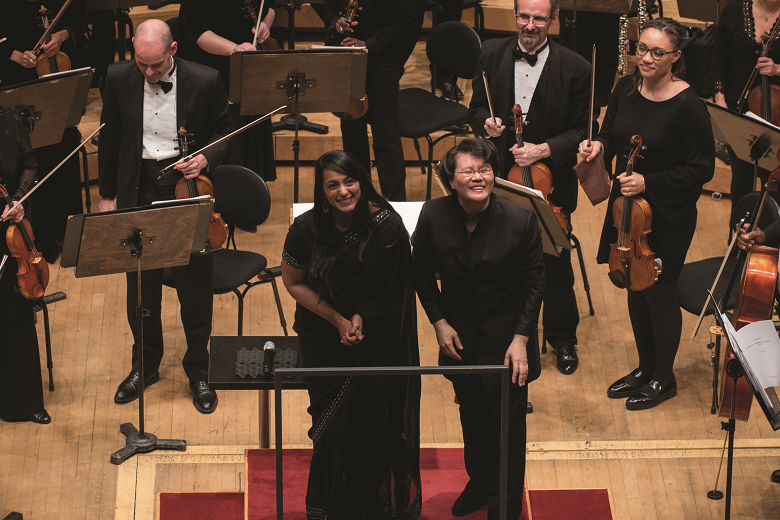
Dr. Subramaniam will be performing his concerto Shanti Priya on the Sinfonietta’s Diwali concert, Love + Light. Get your tickets here!

A World Endangered – Interview with Michelle Isaac and Clarice Assad


At a moment in our history when conservation is crucial and time is of the essence, Chicago Sinfonietta seeks to illuminate environmental change through the power of symphonic music. Forces + Fates, the orchestra’s first conversation of the season, explores the volatility of our planet, and how its future rests solely in the hands of the human race.

Two of the concert’s featured composers, Clarice Assad (Nhanderu) and Michelle Isaac (Earth Tryptich, with Stefan L. Smith and Fernando Arroyo Lascurain), discuss the creative impetus for this environment-themed concert, and how the same priority for planetary preservation extends to the lifeblood of classical music.


Clarice Assad, whose piece Nhanderu is being performed on the first concert of Chicago Sinfonietta's 2019-20 season

Why is classical music such a powerful tool for you, creatively?

Clarice: I think I can say more with music than I can say with words sometimes. That’s the way that I grew up. Starting with a theme or idea following a storyline or motion – trying to play with that within the music if that makes any sense. With classical music, I can paint a picture of what I’m passionate about, what fuels me, what inspires me.

How does that passion relate to this environmental concert in particular?

C: I was always fascinated by Native American culture, and I really identify with the native cultures of Brazil. The Amazon, the tribes that were there – I studied a lot of their music, and I really enjoyed all of their beautiful rituals with the rain, calling it to help with their crops. It’s worshiping, really. They’re asking for help, getting nature to work with them without trying to manipulate it. I wanted to recreate that in the music. One thing I found effective was to get the orchestra to chant and perform with some effects that would sound like rain falling.

What does your creative process look like at present?

Michelle: I’m trying to nail down my creative process. It’s a lot of trial and error. For this piece, I started by just reading really depressing news articles about the state of the planet. I tend to draw a lot of pictures, doodles, and graphs. I write out prose to get ideas going and end up brainstorming a lot of the emotions you feel when you read these things. Sometimes I build compositional structures off of those things, or I use that as a starting point for basic emotions I’m trying to get to. It’s all one big learning process for me right now, and hopefully it works!

Do you think the creative process shifts as you grow as a composer and musician?

C: Mine is still evolving. I think that it never stops evolving, and that’s the idea. I never like to repeat myself if I’m capable of doing so. I’ll try really hard not to do that. When it comes to orchestrating a passage, I always try to do something different. I get upset when I can’t, because oftentimes we tend to fall back on many things that we know work.

Michelle Isaac, one of three composers collaborating on Earth Triptych, which will be premiered as part of Forces + Fates.

Michelle, we spoke a little about the background of Clarice’s piece and what’s she’s trying to convey. What kind of message are you trying to convey about the planet in your movement of Earth Triptych, both socially and musically?

M: The main message of my movement is a sense of urgency: the idea that we’re hitting a point of extremes not only in weather and temperatures, but also in human indifference. It is also extreme in the sense that we are running out of time to do anything about it. So musically, that’s also the impetus – it starts very slow and harmoniously, and makes people comfortable. By the end of it, it’s very aggressive and is written to make the audience feel very uncomfortable.

Clarice, are there components of Nhanderú that share the same outlook as Earth Triptych?

C: No, it’s different. I wasn’t thinking about climate change or anything like that. It’s more about nature evolving on its own. In a way, it’s the opposite of Michelle’s. It’s going back before all of this stuff started to happen and before we started mutilating the earth.

M: The first movement of Earth Triptych that Stefan is composing touches more on the sentiments of Clarice’s piece because it represents Earth before humans. The point of Earth Triptych is to show that there is beauty that we should be protecting. We depict the beauty, what we’re doing to it, and where we’re going to go from there. So, they’re two different snapshots of the same human-to-earth relationship – at different times, in different cultures, with different messaging.

What is the dynamic like in trying to get the movements of Earth Triptych to communicate with one another?

M: It’s pretty unusual for three composers to collaborate on one piece and make it sound cohesive. We’re still trying to figure out the best way to do that. At this point, it’s going to end up being a dialogue like any other, where different voices come to the table to discuss the same thing and hopefully find some common ground.

Are there parallels between the story that we’re telling about the earth and the state of classical music? Are there parallels regarding the evolution of this artform with the discussion that we’re having in the concert?

C: I think we’re not really damaging the Earth so much as we are damaging the capacity of life. We could disappear overnight, and the Earth would still be here, and it would probably be better off without us. We have to self-preserve. It’s kind of interesting because humans are usually very individualistic, and that’s not a good thing.

Going back to the state of classical music, everything is a little up in the air now, and yes, I think that we’re not listening. We’re not focusing because of all the information that we’ve got in our lives. This kind of music requires attention and listening, and that’s kind of a lost art form in a way. It absolutely links back to what is happening in our world. No one is stopping to listen and pay attention, and enjoy nature.

What steps should we be taking to preserve and evolve classical music?

C: It’s evolving no matter what. That’s the beauty of things that are struggling and have a hard time thriving. One thing to consider is the education system. It really needs attention as a whole. We learn things when we’re very young, and we learn values, we embrace what’s important, and we create habits. The fact that there’s no music in schools is pretty bad, the fact that we don’t really teach kids to preserve nature is really bad. It all goes hand in hand.

M: I absolutely agree. There are, in both the environmental and classical music movements, people who are doing the work, who are preserving, listening, and innovating. But it takes more than that if we want to see both come back to life in a more universal, global spread.

Just having this sort of dialogue in a concert hall is really important, and a really cool thing that Chicago Sinfonietta is doing. It’s not done very often. Maybe that’s the way to get people talking about both of these issues – the parallels between environmentalism and classical music and why we need both of them.


Both Nhanderú and Earth Triptych will be premiered on the first concert of our 2019-20 season, Forces + Fates. Get your tickets now!

Project Inclusion | A Brief History and Inside Perspective

CEO Jim Hirsch offers a historical deep dive and insider perspective in to the creation of Chicago Sinfonietta’s groundbreaking fellowship and education program. 

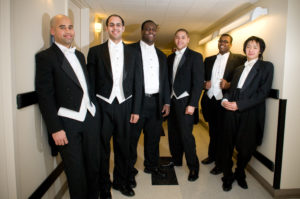
The First Fellowship Class of Project Inclusion

“I just recently saw Hamilton for the second time and the song, “The Room Where It Happens,” has been running through my brain almost non-stop. But as I think about the very beginning of what has become one of Chicago Sinfonietta’s signature programs, Project Inclusion, it’s apropos because I was in the room where it happened! It all came about through a strategic planning process that we began in 2005. First, some background.

Maestro Freeman had a keen eye for finding talented musicians, composers, soloists, and conductors from diverse backgrounds. He had informally mentored and championed individuals throughout his career and helped launch some of the most accomplished artists of the time including Yo-Yo Ma, among others. As we brainstormed what we wanted to accomplish for the future in 2005, it became clear that to help address the dearth of diverse musicians in American orchestras, Chicago Sinfonietta needed to do something about it.  We decided to create

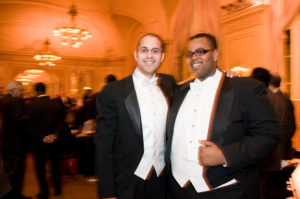
PI Inaugural Class Members Andrew Snow (left) and Demarus Allen-Batieste

a fellowship program that would take early career, diverse musicians and invite them to rehearse and perform with the orchestra for up to two years.

Maestro Freeman, Renee Baker (orchestra personnel manager at that time), and I worked as a team to create the initial program outlines for Project Inclusion. We held auditions and introduced the first class of Project Inclusion in January of 2007 during our MLK concert.

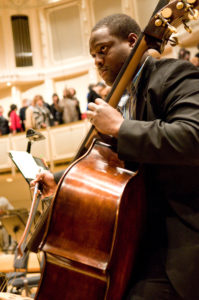
Project Inclusion Double Bassist Brandon Mitchell

The program has been offered ever since and we added a conducting fellowship in 2014 and an administrative fellowship in 2015. When Maestro Freeman passed away we renamed it the Project Inclusion Freeman Fellowship in his honor. We are excited to have recently introduced the 2019-2020 class of Freeman Fellows who will begin their work with us in September and look forward to being in the room where it happens as they begin their career journeys.” —Jim Hirsch

Learn more about the 2019-2020 Project Inclusion Freeman Fellowship class.

Chicago Sinfonietta & Project W: Why are Female Composers Underrepresented?

“One US orchestra that has consistently championed diversity is the Chicago Sinfonietta. Music by women represented 42% of the repertoire it programmed for its 30th-anniversary season in 2017–18 and included four new commissions – from Brazilian–American composer Clarice Assad, African–American composer and violinist Jessie Montgomery, Indian–American composer Reena Esmail and the multi-award-winning Jennifer Higdon.”


Read more about Project W in The Strad’s full article!