
[one_half] [sws_button class=”” size=”sws_btn_medium” align=”sws_btn_align_right” href=”https://chicagosinfonietta.org/wp-content/uploads/Chicago-Sinfonietta-Past-Tense.pdf” target=”_blank” label=”Program Notes” template=”sws_btn_default” textcolor=”ffffff” bgcolor=”3c1c6f” bgcolorhover=”2b154f”] [/sws_button] [/one_half]
[one_half_last] [sws_button class=”” size=”sws_btn_medium” align=”sws_btn_align_center” href=”https://chicagosinfonietta.org/event/concert-iv/” target=”_blank” label=”Buy Tickets” template=”sws_btn_default” textcolor=”ffffff” bgcolor=”3c1c6f” bgcolorhover=”2b154f”] [/sws_button] [/one_half_last]
“In many of our concert programs, the Sinfonietta performs orchestral works from many different musical periods. … the diversity of our audience, board, staff and musicians contributes greatly to [our] vitality… a special mission to seek out musicians, soloists, and composers of all nationalities to nurture their talents and become role models for the future.” – Excerpts from the Chicago Sinfonietta’s 1988-89 Season brochure
What was true in 1988 is equally true today. In Past Tense, Future Tense, we honor this pioneering tradition even as we live out its defining spirit now and in the future.
THE ARTISTS
[one_half]
Harvey Felder, conductor
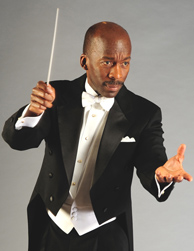 There may not be a conductor better suited to lead a Sinfonietta concert honoring the orchestra’s beginnings than Harvey Felder. Maestro Paul Freeman’s pioneering efforts to include African-Americans and other minorities into full participation in classical music helped pave the way for younger conductors like Felder, who, after a lengthy post as Assistant Conductor of his hometown Milwaukee Symphony, became the Music Director of the Tacoma Symphony Orchestra in 1994, beating out over 100 candidates. He is no stranger to Chicago. In addition to leading the Sinfonietta’s October 2010 “For the Common Man” concert, he has conducted the Grant Park Symphony and has led family concerts with the Chicago Symphony.
Here’s a great article on Maestro Felder from the Tacoma Weekly where Felder discusses growing up in Milwaukee during the civil rights era and how that affected the choices he and his family made with regards to career and achievement.
A more complete biography can be found at the Tacoma Symphony’s website. [/one_half]
[one_half_last]
[/one_half_last]
[one_half]
Sarah Hibbard, soprano
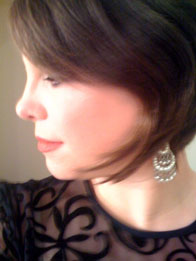 Sarah Hibbard has been the recipient of considerable critical acclaim. A brief sample of some of the words used to describe her singing are “radiant”, “glorious”, “stunning”, “shimmering” and “superb”. The Chicago-based soprano’s musicality comes naturally; she is the daughter of noted jazz trumpeter Dave Hibbard. Ms. Hibbard’s career is well versed in both opera and concert repertoire, and she has sung with Santa Fe Opera, Utah Festival Opera, New York Philharmonic, the Wichita and Syracuse Symphonies, and several others.
More reviews of Sarah’s appearances plus audio samples of her work can be found at her website.
[/one_half]
[one_half_last]
[/one_half_last]
[one_half]
THE COMPOSERS
[one_half]
Wolfgang Amadeus Mozart
Ballettmusik zur Pantomime
Les petits riens: Overture
First Sinfonietta performance May 1988
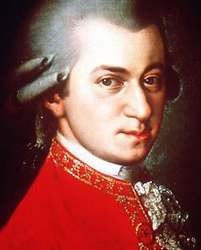 Compositions by Mozart were a staple of the Chicago Sinfonietta’s repertoire in the early years. As was often the case with Paul Freeman, though, lesser known works were highlighted, and this overture from one of Mozart’s rare ballets is no exception. Commissioned by the Paris Opera, it is a product of the composer’s stay in the City of Light during the late 1770’s. At the time, the 22 year old Mozart was heavily in debt and took commissions where he could find them (although he hints in one letter to his father that he was not paid for his work on this piece). Nonetheless, its four performances were greeted with applause. Afterward, the music was lost until 1872 when a score was discovered in the Paris Opera library.
While certainly not among Mozart’s masterworks, the light touch of this charming ballet is the perfect opener on this concert, setting the stage for the evening’s other selections.
[/one_half]
[one_half_last]
[/one_half_last]
[one_half]
Alberto Ginastera
Variaciones Concertantes
First Sinfonietta performance January 1988
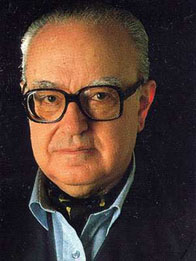 Argentine composer Alberto Ginastera lived and worked 200 years later and half a world away from Mozart. In the middle of the 20th century, composers in the Americas were beginning to draw upon their own traditions instead of looking to Europe for inspiration. Ginastera, several of whose works Paul Freeman would go on to champion, was a prime example of this kind of New World composer. The Concertantes, written during a time of personal turmoil, was Ginastera’s attempt to capture “… Argentine character and atmosphere.” Unlike his earlier ballet Estancia, which used folkloric musical material, Ginastera instead achieves this through his own thematic and rhythmic elements.
[/one_half]
[one_half_last]
[/one_half_last]
[one_half]
Samuel Barber
Knoxville: Summer of 1915, Op. 24
First Sinfonietta performance September 1988
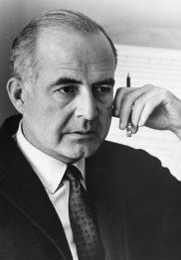 From Argentina we travel several thousand miles north for a uniquely American composition. Scored for voice and orchestra, it is a lush, richly textured work, and sets to music James Agee’s text. Written around the same time as the Ginastera piece, it is, similarly, an attempt to capture the character of a time and place, in this case a nostalgic remembrance of the American South. Barber paints an idyllic picture of Agee’s hometown, a simple, dreamlike depiction that will be sung by soprano Sarah Hibbard in tonight’s performance, narrating in the voice of a child.
Agee’s text as included in Barber’s piece can be found here
[/one_half]
[one_half_last]
[/one_half_last]
[one_half]
George Walker
Antifonys for Chamber Orchestra
First Sinfonietta performance September 1988
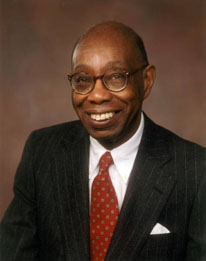 As noted earlier, Paul Freeman sought out newer and overlooked works by composers of color. One of those composers was George Walker, and his Lyric for Strings became a regular feature at Sinfonietta concerts and was recorded for Volume 2 of the orchestra’s African Heritage Symphonic Series. The Antifonys, however, was much rarer, only performed once in 1988. At the time, a Chicago Tribune critic reviewed the performance, calling it a “masterfully orchestrated piece by one of America’s most individualistic voices.” Written in 1968, the work alternates between percussively rhythmic and lyrical passages, perhaps evoking that turbulent year in history. Walker went on to win the Pulitzer Prize in Music in 1996, the first African-American to do so.
It appears as if the Antifonys for Chamber Orchestra was only recorded once, by the Royal Philharmonic Orchestra in 1994. It should come as no surprise that Paul Freeman was the conductor.
[/one_half]
[one_half_last]
[audio:https://chicagosinfonietta.org/wp-content/uploads/George-Walker_Antifonys.mp3|titles=George Walker – Antifonys]
Here’s an excerpt from that recording
[/one_half_last]
[one_half]
Ludwig van Beethoven
Symphony No. 8 in F Major, Op. 93
First Sinfonietta performance March 1988
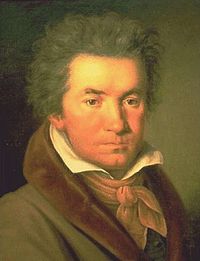 For all of its adventurousness, the Sinfonietta remains solidly grounded in the classical tradition. Composers like Ginastera and Walker are always programmed alongside standard classical repertoire, creating an inclusive framework that stretches across centuries and nationalities. It’s entirely fitting, then, that Past Tense, Future Tense close with Beethoven, one of the greatest composers of all time. The 8th Symphony is generally a light-hearted work, especially when compared to the gravity of the 5th or glory of the 9th. To call it light-hearted is not to say it is light-weight, as it contains passages thoroughly in keeping with Beethoven’s often radical approach. Tchaikovsky thought it among the “greatest” of his symphonies.
For more detail on the circumstances surrounding the writing of the 8th, check out this feature from NPR.
[/one_half]
[one_half_last]
[/one_half_last]